
Adobe Workfront は強力なワーク管理プラットフォームです。マーケティング業務、プロジェクト ポートフォリオ、リソース計画、および企業規模でのチーム間の調整を実行します。複雑なプロジェクト パイプラインを管理する大規模な保険組織にとって、Workfront はオーケストレーション、可視性、およびキャパシティ管理で大きな利益をもたらす重要な投資です。
Aproove はラスト マイル、つまり規制対象コンテンツがレビュー、承認、および証明される瞬間を処理します。会員への連絡、プラン文書、マーケティング資料、開示書類、請求に関する通信。CMS、州の DOI、または市場行動検査官が要求したときに、正確で、弁護可能で、監査可能な作業です。
Workfront が作業をオーケストレーションします。Aproove がそれを完了します。
ラスト マイルが最も難しい理由
ほとんどの規制対象コンテンツは、概要、インテーク、アセット開発、内部レビュー、規制レビュー、承認、配布という長いライフサイクルを経ます。そのライフサイクルの最初の 90 パーセントは一般的なワーク管理です。最後の 10 パーセントは規制された承認であり、そこでアーキテクチャを変更する必要があります。
最後の段階では、コンテンツはプロジェクトではなくなり、規制された成果物になります。すべての決定は監査可能になります。すべての変更は文書化する必要があります。すべての承認は精査に耐えなければなりません。すべての AI アクションは管理され、追跡可能でなければなりません。一般的なプロジェクトオーケストレーションに機能するツールは、その特定の瞬間のために構築されていません。なぜなら、それらはそのように最適化されていないからです。
Aproove はその瞬間のために構築されています。次の 3 つのセクションでは、深度が重要になる場所を示します。
最後の段階で Aproove の深度がさらに進む場所
規制されたドキュメント用に構築されたファイル処理
Workfront: ファイルは、ドキュメントとして Workfront Proof を通過します。レビュー担当者は、ファイル レベルで PDF、画像、ビデオにマークアップします。バージョンはファイルごとに追跡されます。
Aproove: Aproove は、アトミック抽出と呼ばれるプロセスによって、すべてのファイルをピクセルレベルのコンポーネントに分解します。テキスト、画像、色、レイアウトブロック、ページは、単にフラットなドキュメントとして表示されるのではなく、構造化データとして抽出されます。このコンポーネントレベルの理解により、変更されたセクションのみがレビューのトリガーとなり、AI はファイル全体ではなく特定の要素を分析でき、リスクは大きなドキュメントに埋もれるのではなく、正確なコンポーネントで表面化します。
ラストマイルで重要な理由: 60 ページの保険適用範囲の証拠では、プラン年度間で 3 つの給付概要が変更されます。ファイルレベルの校正では、レビュー担当者はドキュメント全体を再確認します。アトミック抽出を使用すると、変更された 3 つの給付概要のみがレビューに送られ、ドキュメントの残りの部分は既に承認済みとしてロックされます。同じ原則は、複数州のポリシーのバリエーション、多言語の会員向けコミュニケーション、および規制された小さな変更が大きなドキュメントの中に隠れているすべてのコンテンツに適用されます。最後の段階では、その精度が規制期限を守るか守れないかの分かれ目となります。
規制されたワークフロー内で管理されるAI
Workfront: Workfrontは、Adobe Firefly ServicesやExperience Cloud全体に統合されたAI機能など、Adobeのより広範なAIエコシステムを通じてAI機能を提供します。これらは、プロジェクト、アセット、コンテンツ制作レイヤーで動作します。
Aproove: Aprooveは、承認ワークフロー自体にAIを組み込み、各ステップでガバナンスを定義します。AIはコンポーネントレベルでファイルを分析し、人間のレビューの前にコンプライアンスとブランドリスクをフラグ付けし、検出された内容に基づいてコンテンツをルーティングします。すべてのAIアクションは、使用されたモデル、分析された入力、および生成された出力とともに監査証跡に記録されます。すべての最終決定は人間が保持します。
最後の段階でなぜ重要なのか: CMS、州の規制当局、および市場行動検査官は、会員向けコミュニケーションやマーケティング資料の作成にAIが使用されたかどうかだけでなく、承認の時点でどのように管理されていたかについてもますます質問するようになっています。より広範なコンテンツ制作レイヤーにおける AI は、アセットの作成とパーソナライゼーションに強力です。規制当局が求めているのは、承認ワークフロー内の AI であり、すべてのアクションを監査グレードでキャプチャすることです。最後の段階では、AI ガバナンスが万全でなければなりません。
規制対応のために構築された監査証跡
Workfront: Workfront は、アクティビティ ログと承認履歴をキャプチャします。監査レポートは、コンプライアンス目的で生成およびエクスポートできます。
Aproove: Aproove の監査証跡は、変更不可能で、タイムスタンプが付与され、作業が発生したときにキャプチャされ、事後にログに記録されることはありません。すべての承認、拒否、コメント、バージョン変更、権限変更、および AI アクションは、ユーザー ID とともに記録され、関連する特定のコンテンツ コンポーネントとワークフロー ステップに関連付けられます。この証跡は、グレード 1 の監査基準に基づいて構築され、規制当局の対応、法的発見、または市場行動調査におけるフォレンジック証拠として機能するように設計されています。
最後の段階で重要な理由: アクティビティ ログには、何が起こったかが示されます。正当な監査証跡は、決定がどのように行われたか、決定が行われたコンテキスト、証拠が不変的に保存されたことを証明します。CMS の審査官がマーケティング資料に疑問を呈したり、州の DOI がポリシー フォームがどのように承認されたかの文書を要求したりする場合、証拠は規制当局が期待する形式で既に存在していなければなりません。最後の段階は、その証拠が生成される場所であり、アクティビティ ログとフォレンジック レコードの違いが実存的になる場所です。
統合の仕組み
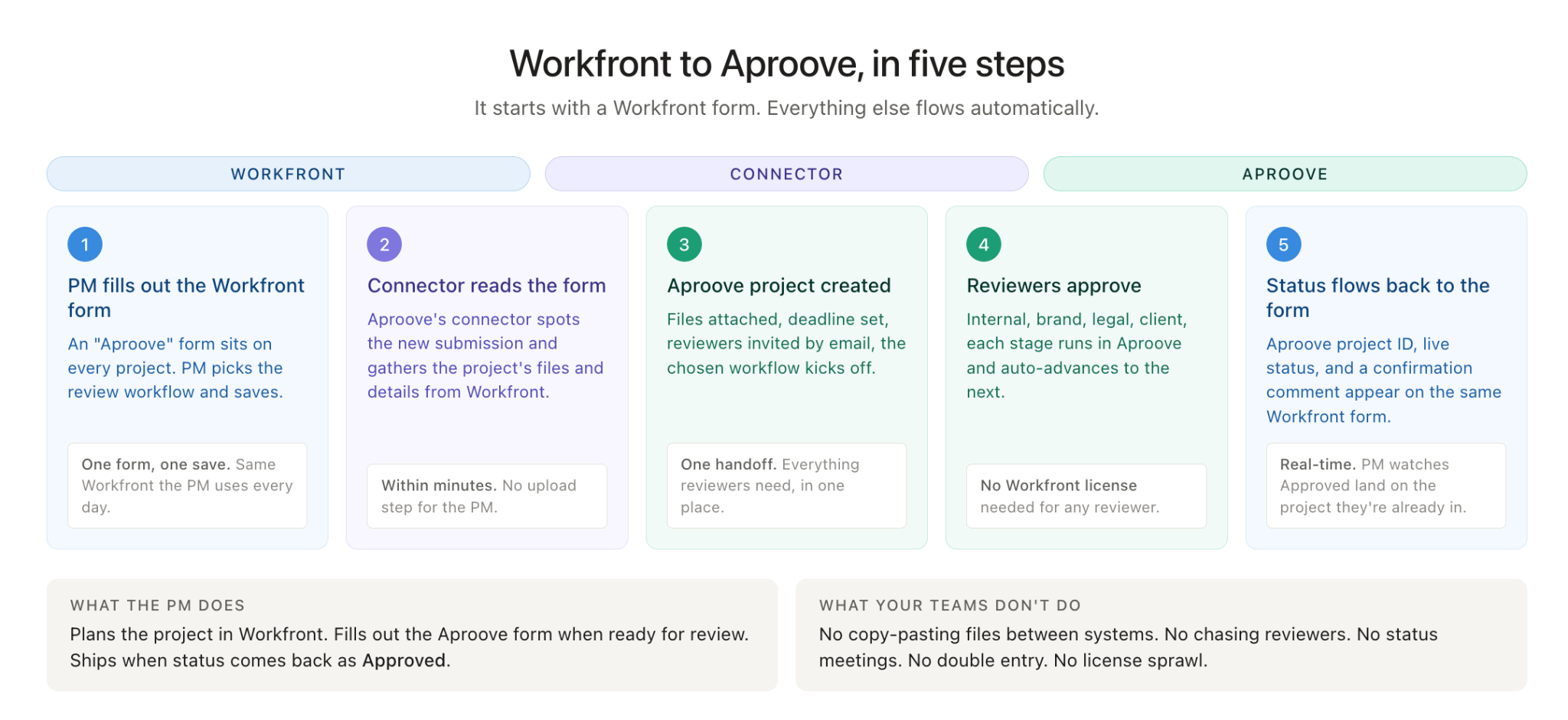
Workfront-Aproove 統合により、プロジェクトとステータスが 2 つのプラットフォーム間で自動的に移動されます。PM は Workfront で作業します。レビュー担当者は Aproove で作業します。オーケストレーションと規制対象のラストマイル間の引き継ぎは、誰もプライマリ システムから離れることなく行われます。
2 つの引き継ぎ
キックオフ (Workfront から Aproove): Workfront プロジェクトが規制対象の承認段階に達すると、自動化された引き継ぎにより、関連するアセットが承認ワークフロー構成、期日、およびプロジェクトとともに転送されるビジネス メタデータとともに Aproove に送信されます。Aproove は適切な承認ワークフローでプロジェクトを作成し、規制対象のレビュー プロセスが開始されます。
ステータス同期 (Aproove から Workfront): Aproove でラストマイルが進むにつれて、ステータスの変更が自動的に Workfront に反映されます。プロジェクトが「レビュー中」、「改訂中」、「承認済み」の状態を移動すると、Workfront タスクが更新されます。コメントと主要なマイルストーンはWorkfrontの「更新」タブに投稿されるため、PMはWorkfrontから離れることなくレビューの進捗状況を確認できます。
システム間で流れるもの
WorkfrontからAprooveへ移動する場合:
- レビュー対象のファイルとアセット
- 承認ワークフロー構成(実行するレビュープロセス)
- 期日と優先度
- ビジネスメタデータ(コストセンター、プランコード、キャンペーンID、州、事業部門)
AprooveからWorkfrontへ戻る場合:
- 相互参照用のAprooveプロジェクトID
- プロジェクトがレビューを通過する際のリアルタイムのステータス更新
- Workfrontの「更新」タブに自動的に投稿されるコメント
- ワークフローが完了したときの最終承認ステータス
エンドユーザーには見えないもの
ミドルウェア層が認証、ペイロードなどの統合メカニズムを処理します。翻訳とステータス コールバック。Workfront と Aproove のエンド ユーザーはミドルウェアを管理しません。PM は Workfront を参照し、レビュー担当者は Aproove を参照します。統合はそのまま機能します。
この図は、キックオフ (Workfront がミドルウェアを介してファイルと設定を Aproove に送信)、レビュー サイクル (Aproove がミドルウェアを介してステータスとコメントを Workfront に返送)、サインオフ (最終承認ステータスが返送) というライフサイクル全体を示しています。
左側の3つのラベル付きフェーズにより、シーケンスをスキャンしやすくしています。
一般的な導入パターン
WorkfrontとAprooveの両方を使用する保険会社は、通常、次の3つのパターンのいずれかに従います。
パターン1:Workfrontオーケストレーション、Aproove が規制レビューを担当 マーケティング チームは、Workfront でキャンペーンを計画し、クリエイティブ制作を管理し、チーム間の作業を調整します。成果物が規制レビュー段階 (CMS マーケティング資料の承認、州の DOI 申請、計画文書の更新) に達すると、統合により、統制レビューのために Aproove に引き渡されます。承認されると、アセットは配信と追跡のために Workfront に戻ります。これが最も一般的なパターンです。
パターン 2: プロジェクトのシェルは Workfront、ラスト マイル全体は Aproove Workfront は、プロジェクトのメタデータ、期限、リソース割り当てを保持します。Aproove は、取り込み、アセット開発、反復レビュー、AI 支援コンプライアンス スキャン、最終承認という、ラスト マイルのコンテンツ ライフサイクル全体を実行します。ステータスはWorkfrontに反映されるため、プロジェクトマネージャーはエンドツーエンドの進捗状況を1か所で確認できます。
パターン3:監査記録システムとしてAproove、その他すべてにWorkfront 規制上の重要事項を含むコンテンツ(会員向けコミュニケーション、マーケティング資料、計画書など)の記録システムとしてAprooveが使用されます。Workfrontは、その他のすべてのプロジェクト作業(社内イニシアチブ、ITプロジェクト、運用プログラムなど)の管理を継続します。各プラットフォームは、それぞれ得意とする作業を担います。
ワークマネジメントプラットフォームを比較する際、企業はAdobe Workfrontのような包括的なエンタープライズソリューションと、Aprooveのような専門プラットフォームとの間で重要な選択を迫られます。Adobe Workfrontは大規模なプロジェクトおよびリソース管理に特化した豊富な機能を提供しますが、Aprooveは厳格な校正、マーケティングコンプライアンス、柔軟なワークフローを必要とする業界向けに、コンプライアンスを重視した統合的なアプローチを提供します。この包括的な比較により、単一ソリューション内で効率性、制御性、セキュリティを求めるチームにとって、Aprooveが優れた選択肢である理由が明らかになります。