
Where AI helps in regulated review: checking content, not creating it
There is a big line in the sand between using AI to create something and using AI to proof and check. That is where it works really well.— Dave, RR Donnelley
Customers tried using AI to create content, and it never quite works as well. It actually generates more work for our teams to go back and manually proof it.
Human in the loop: AI flags the risk, people make the call
The goal is not to have AI change it. The goal is to have it understand it and flag it, so the human in the loop can zone in on that area.
It highlights things our teams would normally glance over, and tells us: take a second, look at this.
What AI councils and legal teams will approve
Ask what the goal of the AI is: to help you be more effective, or to do a task a person did manually before? If it makes you more effective, it tends to pass the sniff test with legal.
We would never let AI write emails and send them to our clients. But we will let it review them.
Data governance is why Aproove gives model choice
We always get questions about data governance: is there a risk this is leaving a closed system? That is a big reason we give full model choice at any step, including a self-hosted model or your own.— Curt Black, Aproove
What AI will take off human hands in two years
We are going to have AI checking a lot more information for us, because we will start to trust it more. Nobody wants to sit and check a brand book to see if a PMS color is right.— Dave, RR Donnelley
The goal is not to remove people from the process. It is to make their job easier.
Inside the live demo: AI driving the workflow
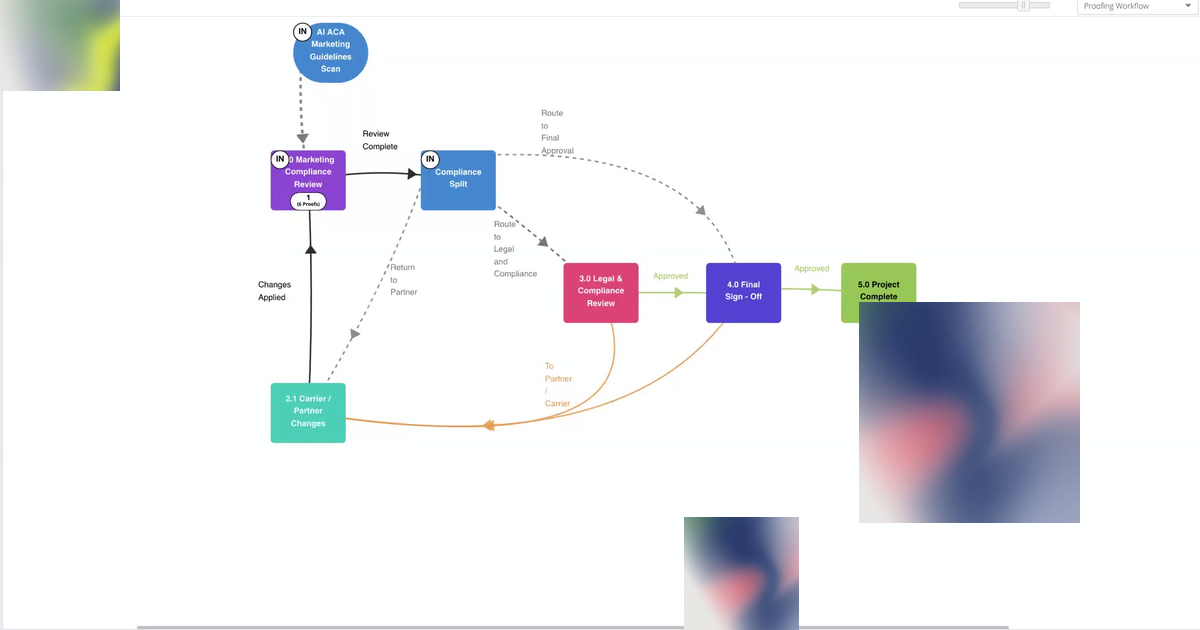
Previously, everything in Aproove was human driven. Now AI can drive the workflow. It flags risk, creates notes, and pulls humans in at the correct spots.— Vince Pucci, Aproove